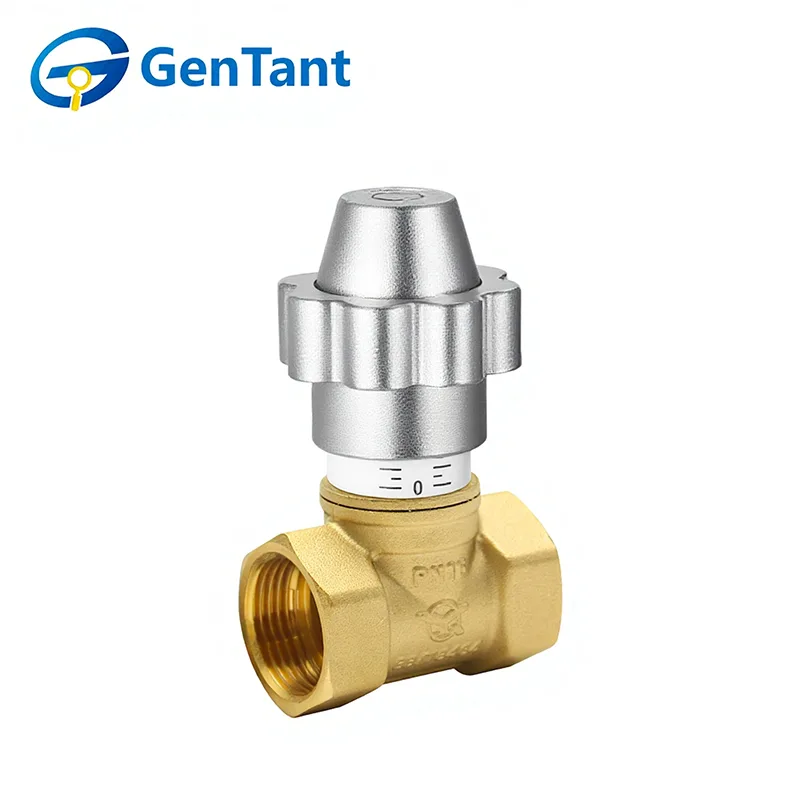
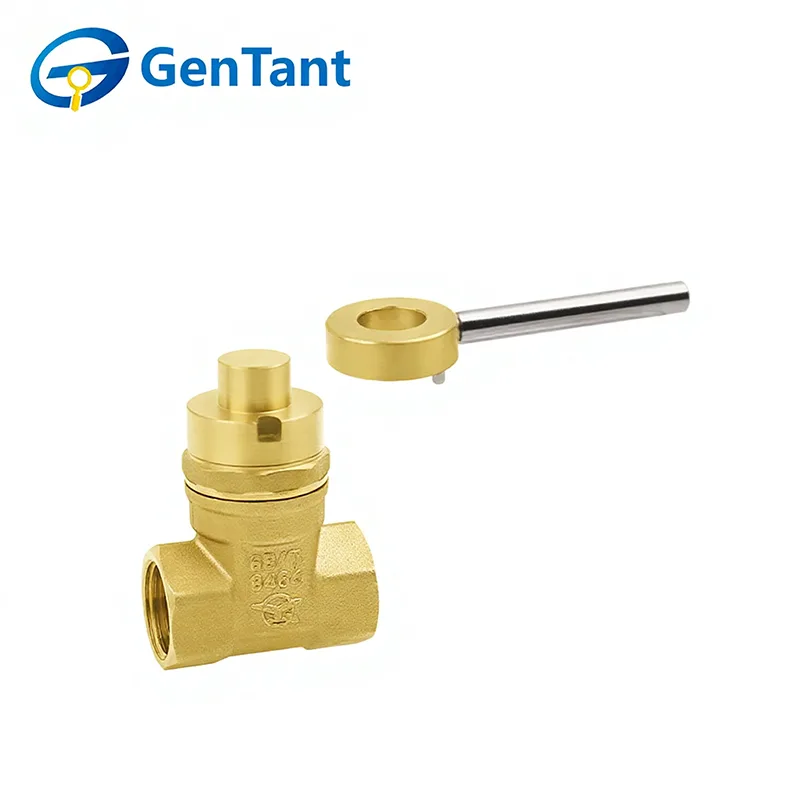
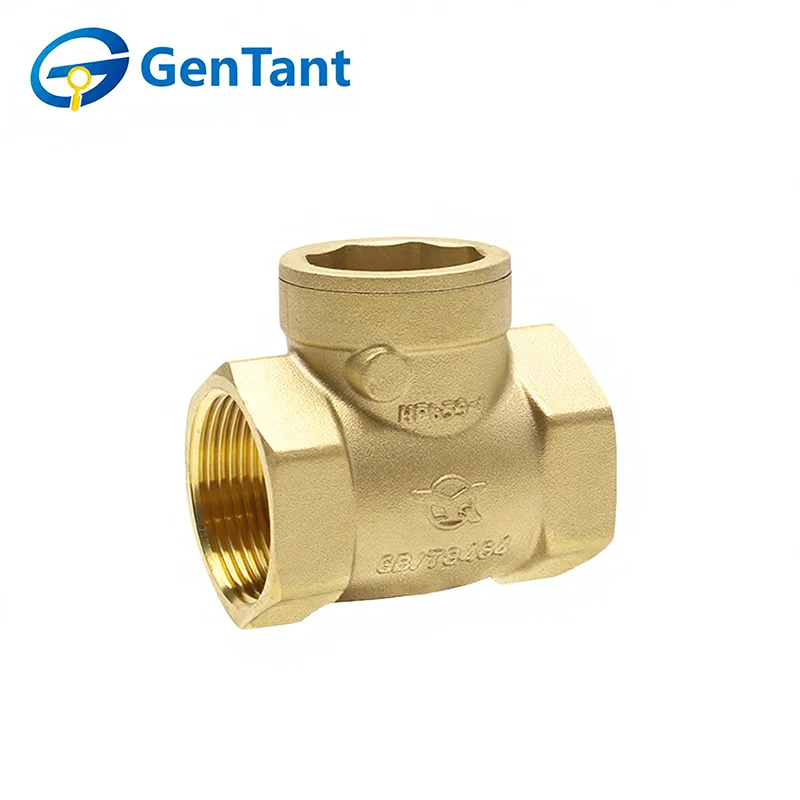
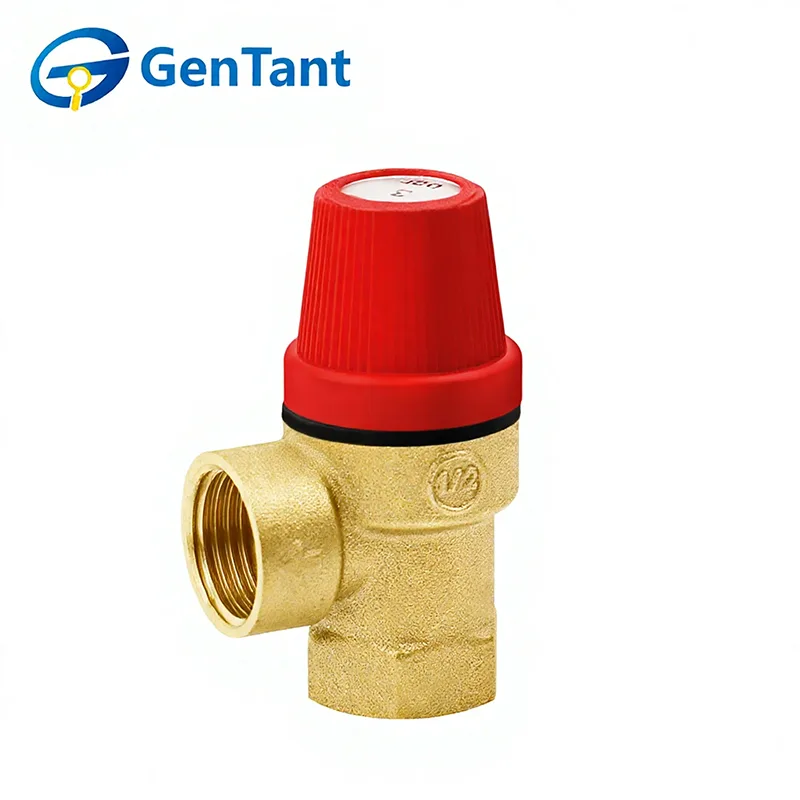
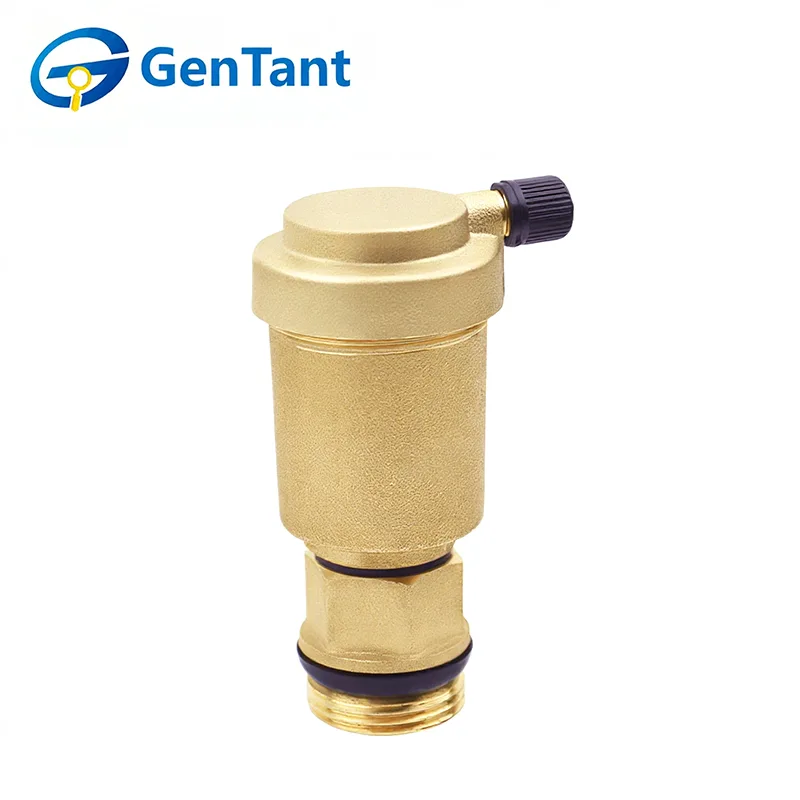
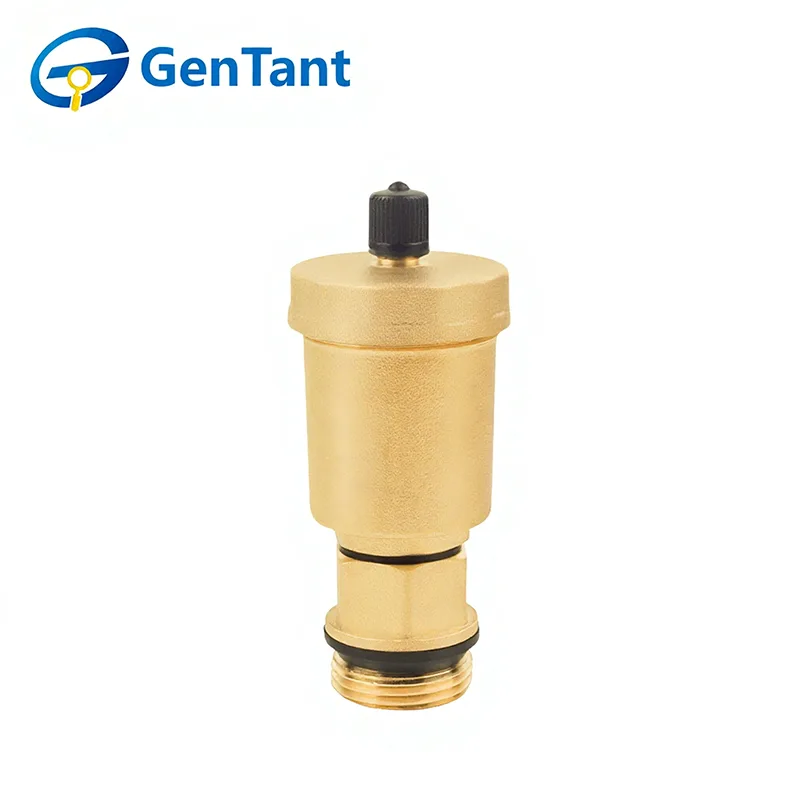
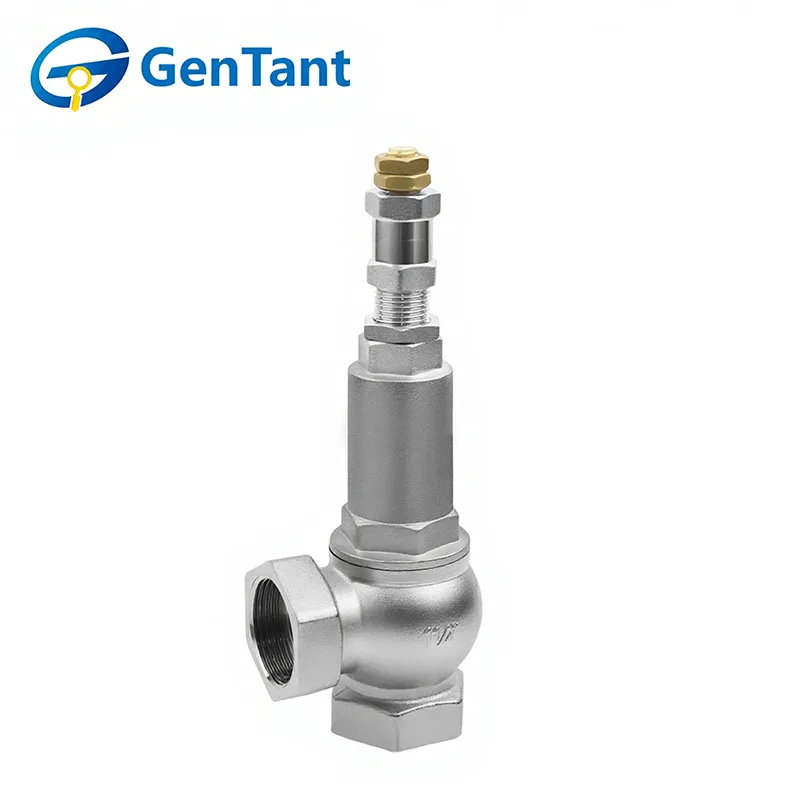
Safety Valve
As a professional manufacturer, GenTant is committed to providing you with high-quality, reliable safety valves that meet stringent international standards. Our valves are designed to offer precise actuation, durable construction, and consistent performance under demanding conditions. We focus on delivering the most economical and high-performance solutions to customers across the globe, ensuring both safety and value. Beyond our standard range, we possess the engineering expertise and flexible manufacturing capabilities to satisfy special service requirements and unique, demanding specifications. Partnering with GenTant means securing a tailored safety solution backed by technical proficiency and a dedication to safeguarding your critical assets.
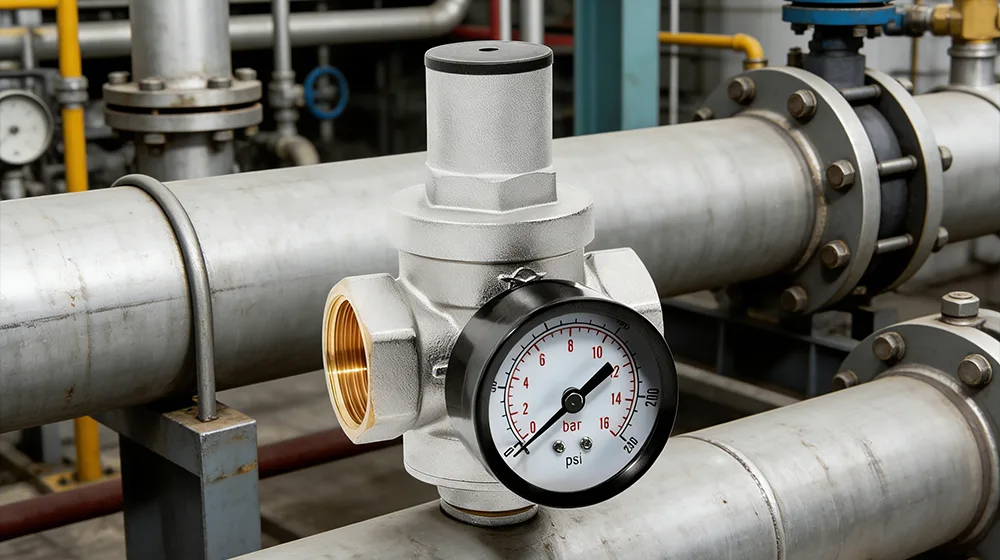
Safety valves are critical, non-negotiable protective devices engineered as the last line of defense in pressurized systems. Their primary function is to automatically open and release excess pressure when a predetermined set point is exceeded, thereby preventing catastrophic equipment failure, explosions, and ensuring personnel and environmental safety. Once system pressure returns to a safe level, the valve reseals automatically, maintaining system integrity and continuity of operation. This essential function makes them indispensable across numerous industries, including HVAC, commercial boilers, process heating, and water supply systems.
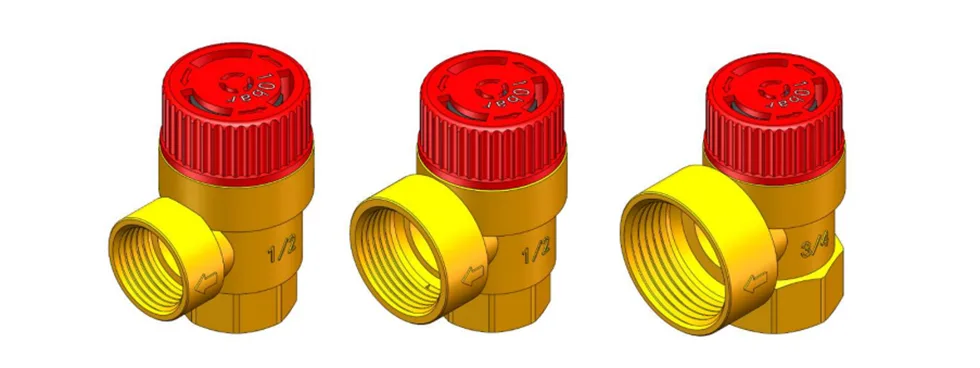
Product Feature and Application
Safety valves are utilized as safety protection devices across various systems, including heating, cooling, and domestic water supply. When system pressure increases and exceeds the valve's discharge pressure, the safety valve automatically activates to relieve the pressure and release the medium, thereby ensuring the safety of internal pipelines and equipment. Conversely, the valve automatically reseats and closes when the system pressure falls below the designated pressure.
Product Parameter (Specification)
Threaded connection type
DN15 (1/2")、DN15×20 (1/2" × 3/4")、DN20×25 (3/4" × 1")
Technical Specification
Medium: Water or glycol solution (maximum concentration 50%)
Operating Temperature:-20℃~ 110℃
Maximum Working Pressure: ≤16 bar
Rated Pressure (Pnr): 2.5-3-3.5-4-5-6-7-8-10 bar (pressure value non-adjustable)
Opening Pressure (Po): ≤Pnr 10%
Closing Pressure (Pf):≤Pnr 10%
Valve Body: High-temperature integral forging, thickened wall thickness, higher strength.
Product Dimension
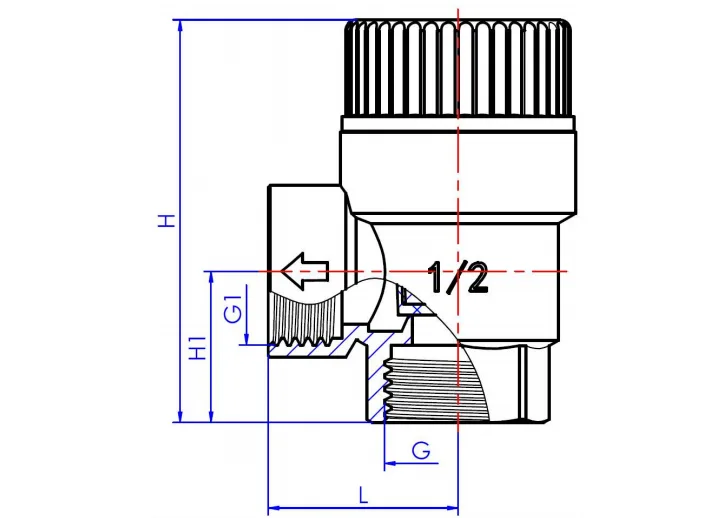
|
DN |
G |
G1 |
L(mm) |
H(mm) |
H1(mm) |
|
15 |
1/2" |
1/2" |
27 |
57.5 |
21.5 |
|
15×20 |
1/2" |
3/4" |
29.5 |
57.5 |
25.5 |
|
20×25 |
3/4" |
1" |
33 |
59.5 |
25.5 |
Working Principle
The internal piston of the safety valve utilizes spring tension to close the valve seat. When the system pressure exceeds the preset tension of the spring, the piston moves upward, away from the seat, and opens the water release channel. The set pressure of the safety valve is the maximum allowable working pressure for the system.
When the system pressure drops below the closing pressure of the safety valve, the tension exerted by the spring on top of the piston causes the water flow channel to close, restoring the system to its normal operating state.The diameter of the safety valve outlet is equal to or greater than the diameter of the inlet; this design facilitates rapid pressure relief.
Installation and operation instructions
Before installing the safety valve, qualified professional personnel should select the correct model based on the system characteristics and in compliance with relevant regulations. The valve body is marked with the direction of water flow, which must be strictly followed during installation.
1.Applicable Systems
1.1 Heating systems
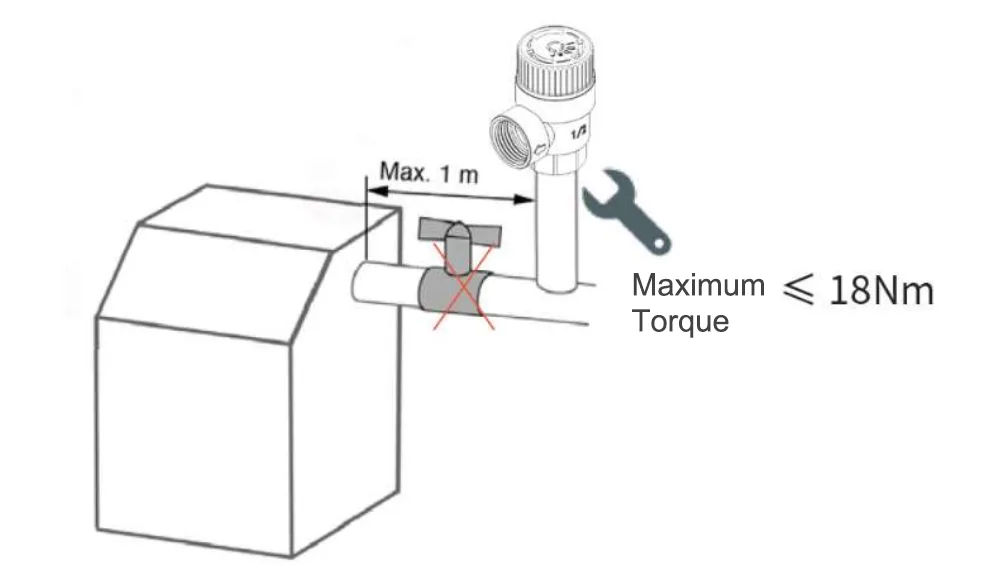
The safety valve should be installed at the top of the heat source (boiler, heat pump, etc.), or within a distance of 1 meter from the water supply pipe. There should not be any form of shut-off valve between the safety valve and the connection pipe of the heat source.
1.2 Domestic Hot Water Systems
The safety valve should be installed at the cold water inlet of a storage-type hot water tank, ensuring there are no shut-off valves of any form on the piping between these points.
1.3 Compressed Gas Systems
The safety valve is suitable for use in compressed gas systems.
2.Installation Method
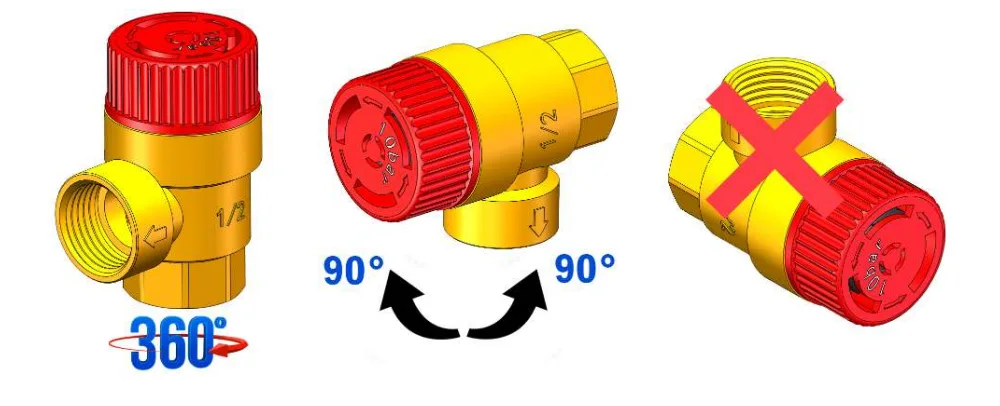
Before installation, ensure that the system pressure matches the safety valve's opening pressure; ensure the system is completely depressurized and cooled down; ensure there are no shut-off valves of any form between the system and the safety valve; flush the system pipelines. The safety valve can be installed vertically or horizontally, but cannot be installed inverted (as shown in the figure below). Following these installation methods can prevent impurities and sediments from affecting normal operation.
3.Installation Precautions
3.1 When installing the safety valve, the torque should be ≤18N·m to prevent valve deformation, which could lead to failures. There should be no shut-off valves of any form (ball valves, check valves, etc.) between the system and the safety valve, as shown in the figure below.
3.2 The diameter of the piping connecting the system to the safety valve must be greater than or equal to the inlet pipe diameter of the safety valve. Ensure the flow direction of the medium aligns with the direction of the arrow on the safety relief port, as shown in the figure below. It is recommended to place a reminder sign near the safety valve relief port stating: “Do not block the outlet during system operation.”
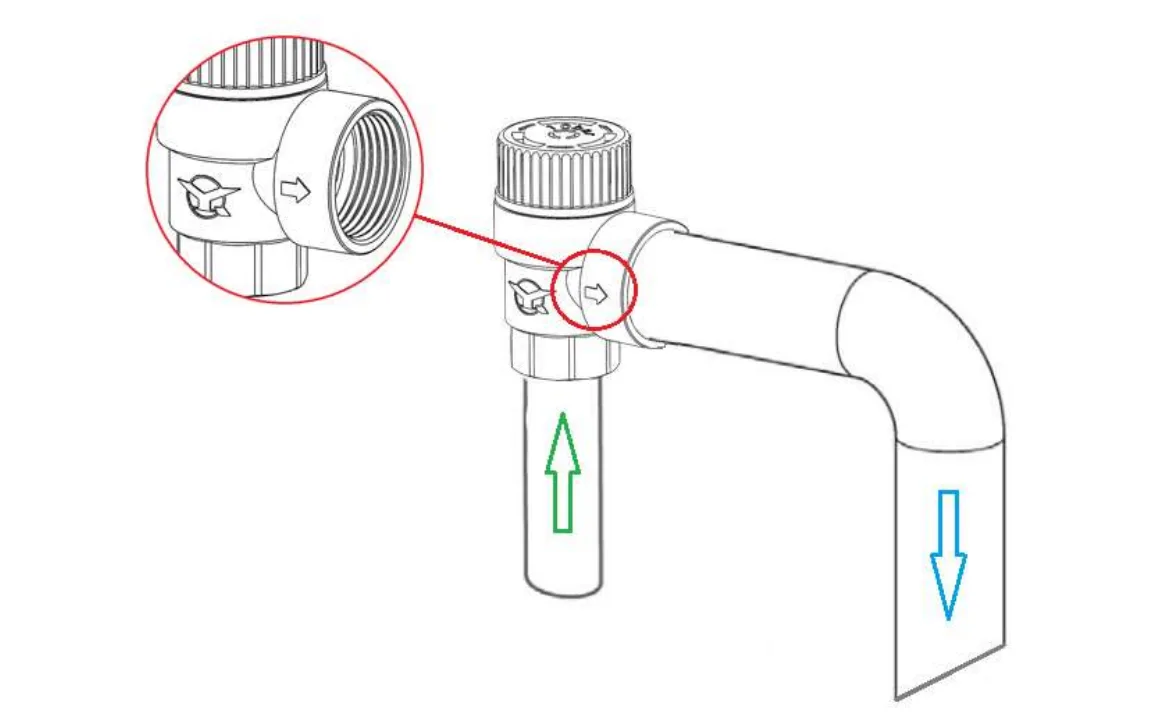
3.3 Do not install shut-off valves or other valve accessories that prevent the flow of medium on the pressure relief port. Ensure the medium can overflow from the pressure relief port smoothly and unobstructed. The drain pipe should have a maximum of two elbows and a length of≤2 meters.
3.4 Ensure there is a floor drain or a receiving device near the safety valve installation location for safe drainage during commissioning, fault maintenance, etc., to avoid personal injury or property loss caused by flowing medium.
Commissioning
Rotate the handwheel once in the direction of the arrow on the top handwheel of the safety valve. Medium should be discharged from the pressure relief port at this time. If no medium is discharged, check if the pressure relief port is blocked or if the safety valve is damaged, and check the system pressure status. The handwheel rotation can only be used to check if the safety valve is working properly. Do not rotate the handwheel multiple times or in the reverse direction, as this will cause damage to the safety valve.
Maintenance
Recommendation: Perform a functional test every 6 months.
Send Inquiry
Contact Info
-
Address
Dieyuan Road, YinZhou District, Ningbo, Zhejiang, China
-
Tel
-
Email
If you have any enquiry about quotation or cooperation, please feel free to email us at zchen@gentantvalves.com or use the following inquiry form. Our sales representative will contact you within 24 hours. Thank you for your interest in our products.
News Recommendations