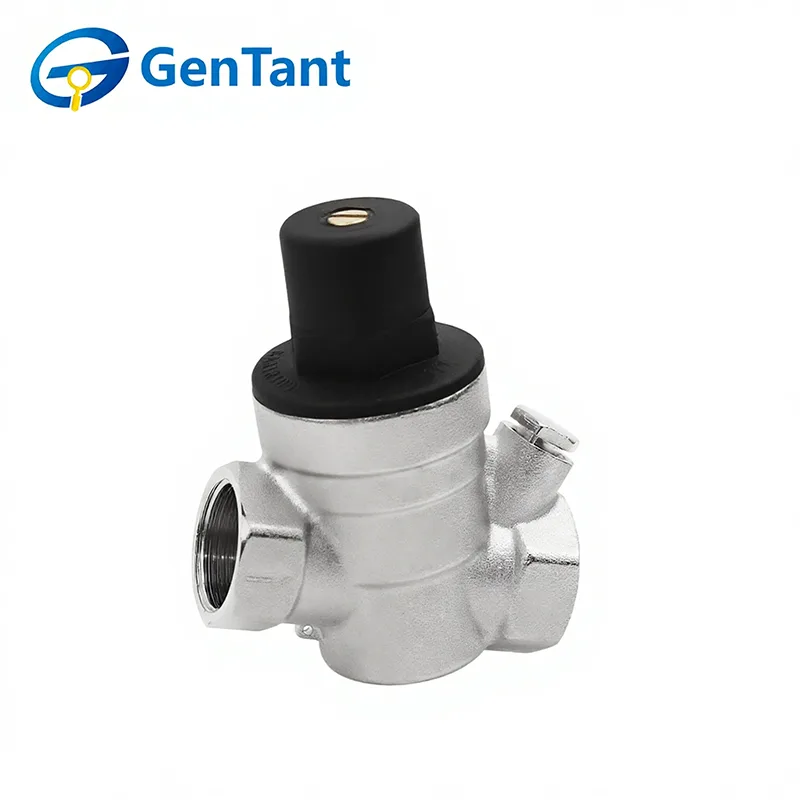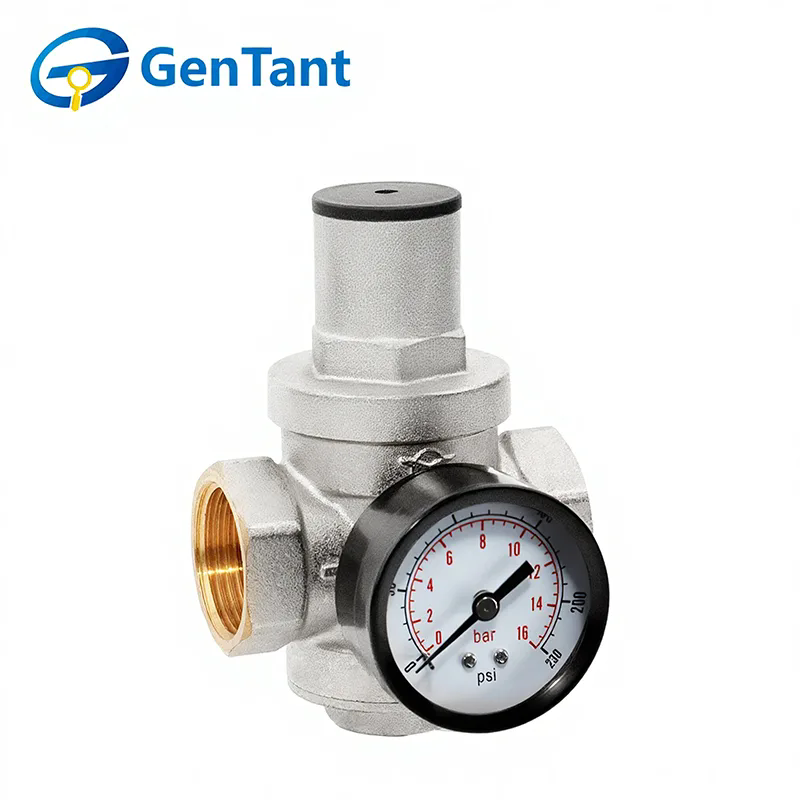
Pressure Reducing Valve Adjustment: Standard Operating Procedure and Guidelines
1.Pre-Adjustment
Identify valve type (spring-loaded, piston, diaphragm).
Verify stable inlet pressure exceeds target outlet by 10%.
Close downstream valves.
Gather required tools (wrenches, screwdrivers, pressure gauge).
2.Adjustment Steps
Spring-Loaded Valves
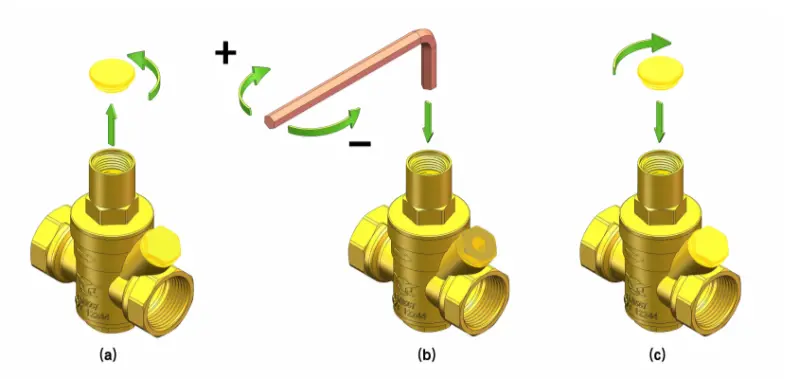
Loosen lock nut, turn adjustment screw clockwise to increase pressure or counter-clockwise to decrease.
Adjust in 1/4-turn increments while monitoring gauge.
Tighten lock nut when target reached.
Verify stability within ±5% after opening downstream valve.
Piston/Diaphragm Valves
Isolate valve by closing inlet/outlet.
Release residual pressure.
Adjust mechanism: piston valves via handwheel, diaphragm via spring cap (typically 0.1-0.5 MPa per turn).
Slowly open inlet valve while monitoring outlet pressure.
Fine-tune as needed.
Fully open valves and monitor 10-15 minutes.
3.Safety Critical
Never exceed nameplate maximum pressure.
Never adjust under pressure.
Ensure correct inlet/outlet orientation.
Industrial valves require calibration every 6-12 months.
4.Application Notes
Gas systems: target 2.8-3.0 kPa, leak-test connections.
Steam systems: drain condensate before operation.
Hydraulic systems: adjust at stable operating temperature.
5.Common Issues
Unstable pressure indicates worn seat, failed spring, ruptured diaphragm, or clogged filter—inspect and replace components accordingly.
Related News
- Why Is a Static Balancing Valve Important for HVAC Efficiency?
- Why Are Filtration And Protection Valves Vital for Modern Fluid Systems?
- Why Are Pressure Management And Safety Valves Essential for Modern Fluid Systems?
- How Does a Static Balancing Valve Improve Your HVAC System?
- How Does an Isolation And Shut-Off Valve Improve System Safety?
- How Does a Pressure Reducing Valve Improve System Efficiency and Safety?
Leave me a message