Introduction to Common Balancing Valves in HVAC Systems
Buildings account for approximately 40% of global energy consumption, among which HVAC (Heating, Ventilation, and Air Conditioning) systems consume over 40% of building energy usage. To achieve low-carbon and energy-efficient buildings, the optimized management of HVAC systems is of great significance.
There is a growing demand for energy-saving and high-efficiency HVAC systems that maintain indoor comfort and environmental health, as well as facilitate building carbon emission reduction. Hydraulic flow optimization serves as a core method to cut down the energy consumption of HVAC systems and improve the overall operational efficiency and performance of buildings.
Balancing valves are specially designed to distribute accurate flow to designated areas at the optimal time, realizing reliable hydraulic balance within water systems. Below, we will introduce several mainstream balancing valves manufactured by GenTant for HVAC applications.
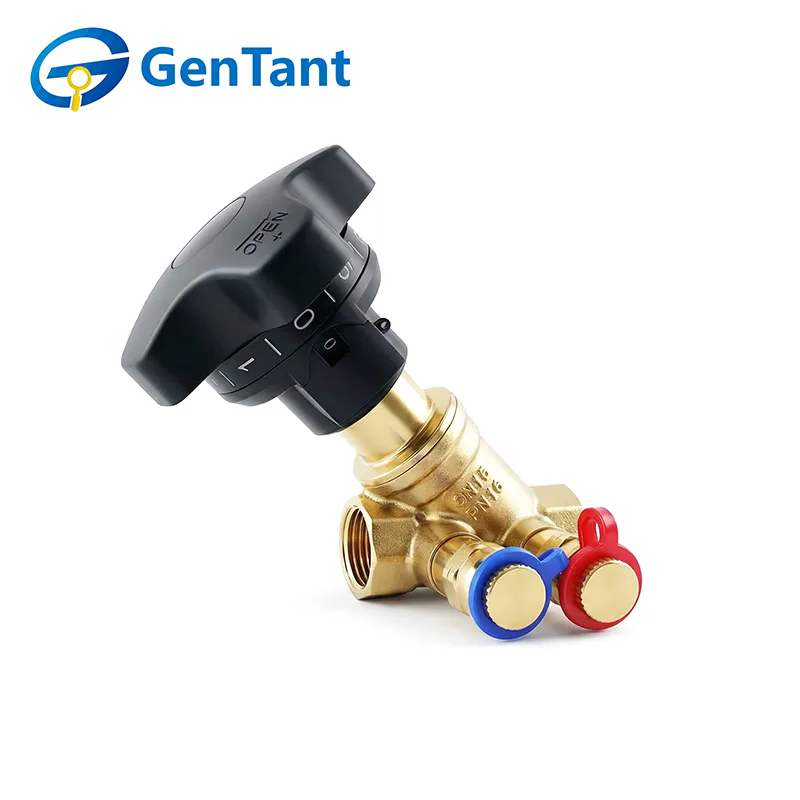
1. GTB1000 Static Balancing Valve
The GTB1000 static balancing valve is widely applied in central air conditioning and heating systems. Equipped with professional commissioning devices, this valve enables precise on-site pre-regulation of water system flow. It ensures that the flow ratio of each branch circuit is consistent with the designed flow requirement, maintaining an optimal static hydraulic balance for the entire piping system.
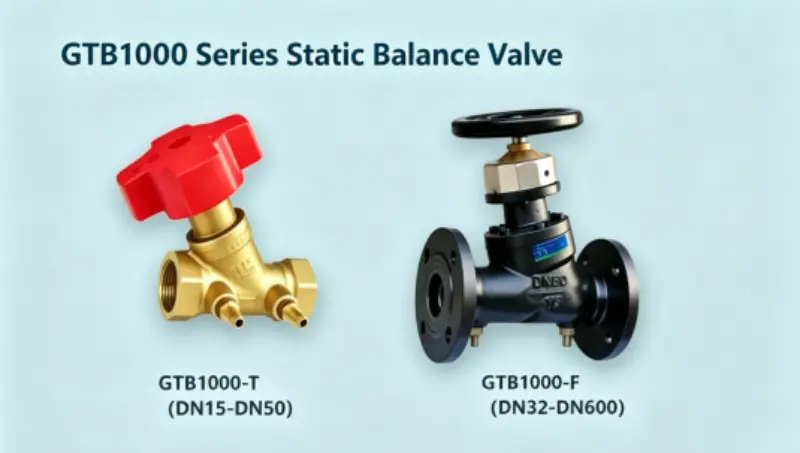
· Applicable for flow balancing in constant-flow water systems of heating or cooling applications;
· With shut-off function, can be used as an alternative to a globe valve;
· Equipped with stroke locking function and pressure test ports;
· Suitable for installation in supply or return pipelines.
2. GTB2000 Series Static Balancing Valve
Tailored for central air conditioning and heating systems, the GTB2000 series static balancing valve supports accurate on-site flow pre-regulation with dedicated commissioning tools. Compared with conventional models, this series features higher regulation accuracy, upgraded performance and an aesthetic streamlined appearance. It effectively synchronizes the actual flow of each branch with the designed flow to achieve stable static hydraulic balance.
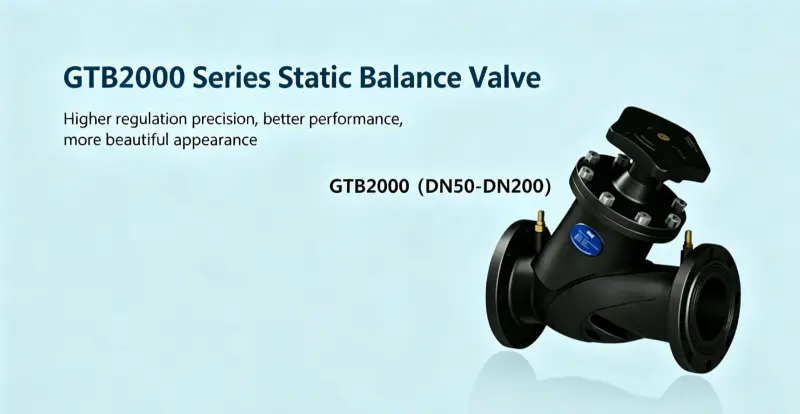
· With equal percentage flow characteristics
· With shut-off function, can replace a globe valve
· With stroke locking function and pressure test ports
· Suitable for installation in supply or return pipelines.
3. GTP2000 Series Dynamic Differential Pressure Balancing Valve
The GTP2000 series dynamic differential pressure balancing valve is engineered for central air conditioning and heating systems. It steadily controls the differential pressure across terminal equipment and control valves, eliminating the interference caused by system pressure fluctuations. This valve stabilizes the flow of branch pipelines and effectively avoids temperature fluctuations of terminal HVAC equipment.
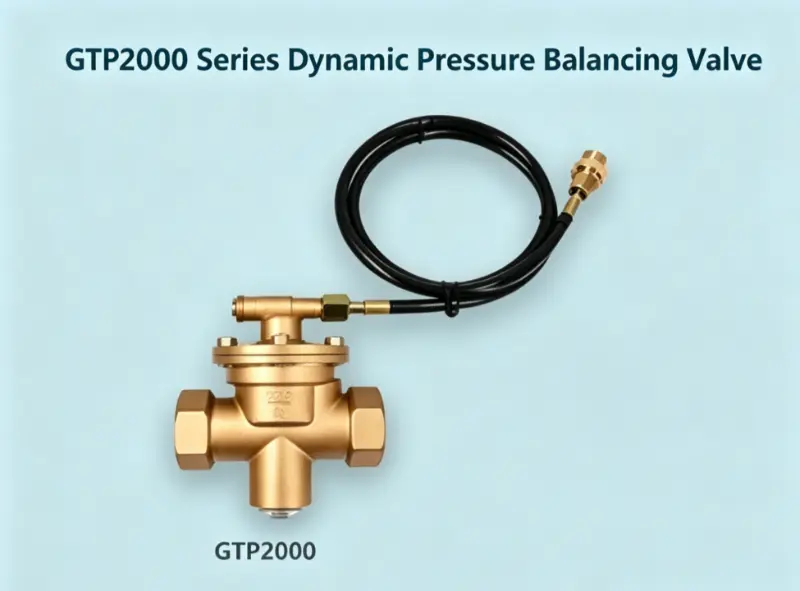
· Maintains a constant differential pressure across the controlled system;
· Supports autonomous regulation within the controlled system;
· Features an advanced stepless pressure regulation design, offering a differential pressure control ratio up to 25:1;
· Absorbs pressure fluctuations from the external network;
· Incorporates an automatic anti-clogging function.
4. GTP3000 Series Electric Balancing Valve
Integrating dynamic balancing and flow regulation functions, the GTP3000 series electric balancing valve delivers constant flow regardless of system pressure variations within its working range. After setting the valve opening according to actual flow demands, the internal spool automatically adjusts the variable flow channel to maintain stable flow.
Featuring an innovative rigid structure, this electric balancing valve overcomes the inherent defects of traditional diaphragm-type valves, such as short service life and limited regulation range. The precisely calibrated spool guarantees a flow deviation within ±5%, achieving highly accurate and reliable hydraulic control.
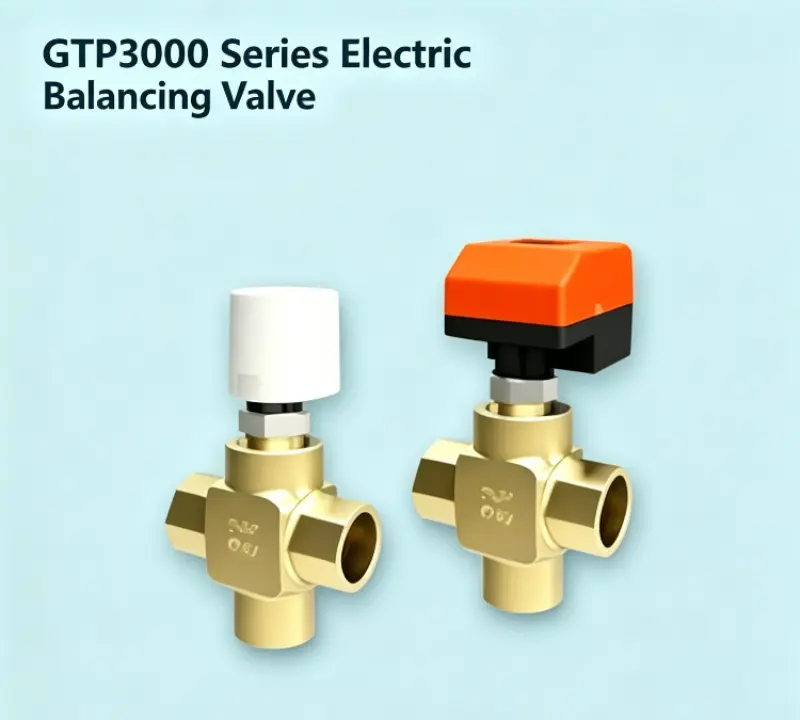
· Integrates dynamic balancing and regulating functions in one unit;
· No on-site commissioning required, reducing labor costs;
· Features an innovative rigid structure for long service life and wide regulating range;
· Precisely calibrated spool maintains flow deviation within ±5%;
· No rebalancing design is needed when the system changes.
Related News
Leave me a message