Why Is a Static Balancing Valve Important for HVAC Efficiency?
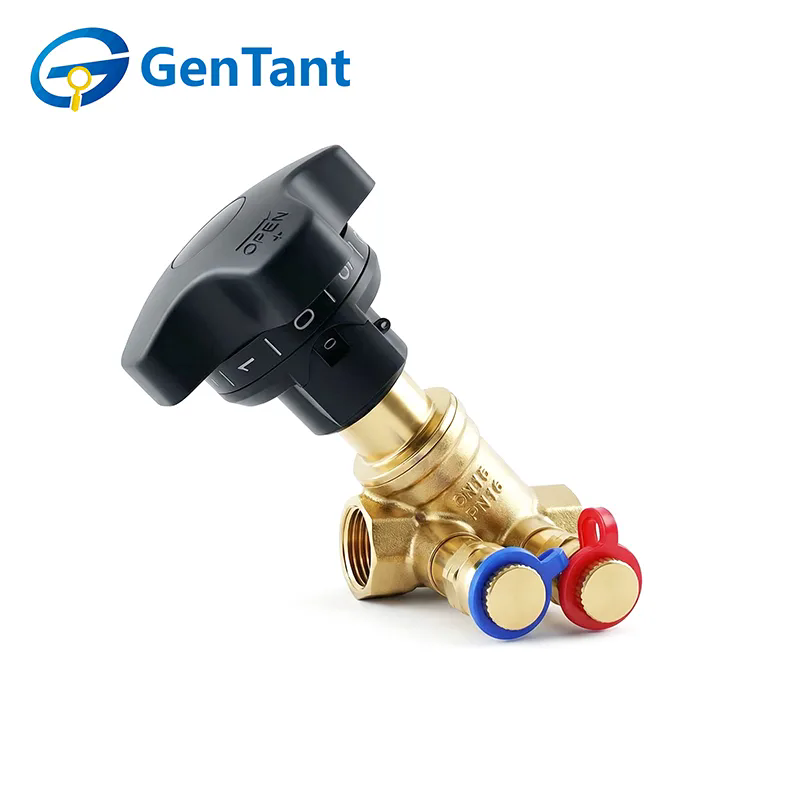
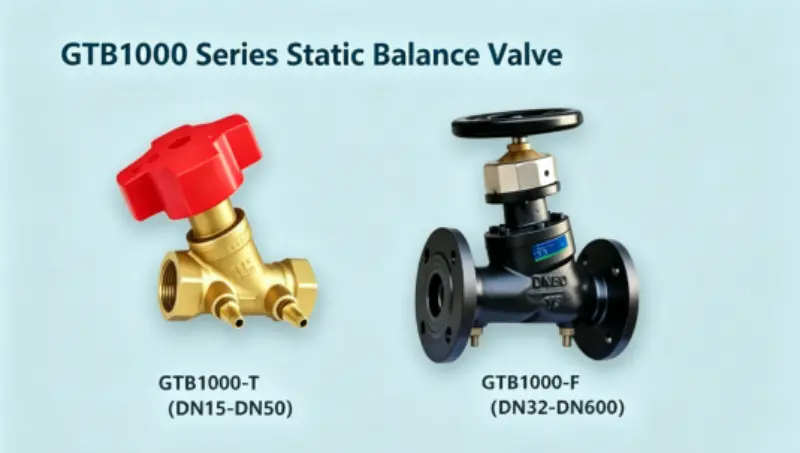
As modern buildings place greater emphasis on thermal comfort, energy efficiency, and stable HVAC operation, hydronic system balancing has become an important engineering consideration. A Static Balancing Valve helps regulate and verify water flow within individual branches, allowing engineers to distribute heating or cooling water more consistently throughout a system. Proper hydraulic balancing can reduce flow deviations, improve terminal-unit performance, and support more predictable operation across different zones.
The growing complexity of commercial buildings, residential developments, and industrial facilities is also increasing the need for dependable hydraulic control components. Rather than relying solely on pump capacity or control adjustments, engineers can use properly selected balancing equipment to establish the intended flow conditions throughout the network. This approach provides a practical foundation for efficient and stable HVAC performance.
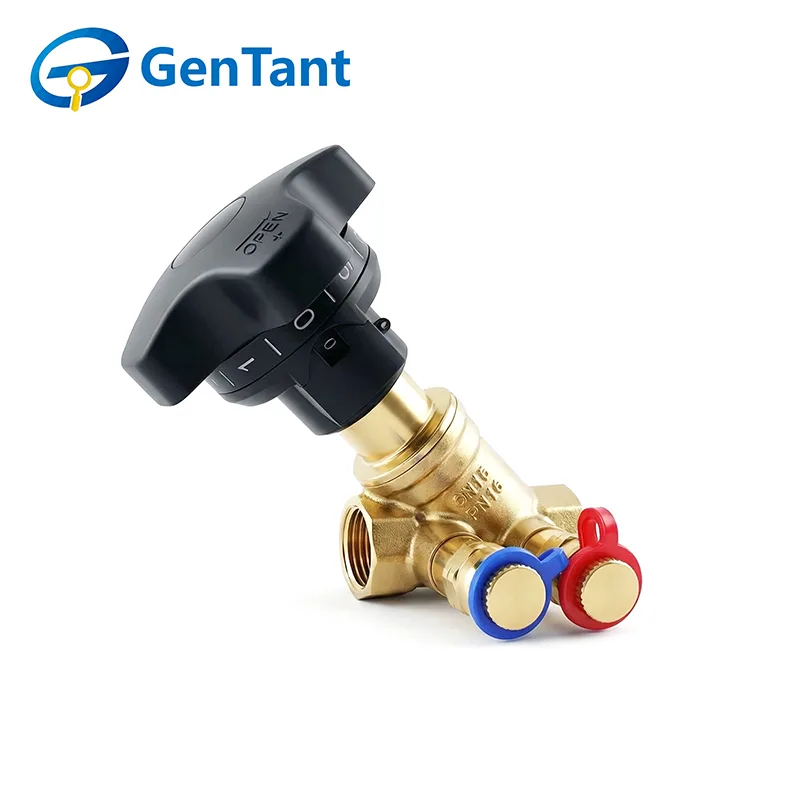
Why Hydraulic Balance Matters in Modern HVAC Systems
A hydronic HVAC system depends on controlled water circulation to transfer heating or cooling energy between central equipment and terminal units. When the distribution network is not properly balanced, some branches may receive excessive flow while others receive insufficient flow. Such differences can create uneven temperatures, unnecessary pump demand, and difficulty maintaining consistent indoor conditions.
Hydraulic balancing addresses these variations by regulating resistance within individual circuits. Once the appropriate flow condition is established, water can be distributed more predictably across the system. This is especially valuable in installations with multiple branches, varying pipe lengths, different terminal loads, or changing hydraulic resistance.
Addressing Uneven Flow Distribution
Flow imbalance can occur for many reasons. Differences in pipe geometry, fitting arrangements, terminal-unit resistance, and branch length all influence how water moves through a hydronic network. Without suitable balancing measures, water naturally tends to favor paths with lower resistance.
This can make commissioning more complicated and may result in persistent comfort complaints after a system has been placed into service. Properly configured balancing components provide engineers with a means of adjusting branch resistance and bringing measured flow closer to the design requirement.
- More consistent distribution: Proper adjustment helps deliver suitable flow to different circuits.
- Improved terminal performance: Correct water flow supports more stable heat transfer at coils and other terminal units.
- Better commissioning: Measurable hydraulic conditions make system adjustment more structured and repeatable.
- Reduced operational instability: Balanced circuits can help minimize the effects of excessive or insufficient branch flow.
How Mechanical Balancing Supports System Commissioning
Commissioning is an essential stage in HVAC project delivery because the performance of installed equipment depends on how well the completed system matches its design intent. Drawings may specify target flow conditions, but actual site conditions can differ because of installation tolerances, equipment selection, and variations in system resistance.
A static balancing approach gives commissioning engineers a practical method for adjusting individual circuits. The valve creates a controllable resistance that can be set according to the required hydraulic condition. With appropriate measurement equipment and commissioning procedures, technicians can evaluate the actual flow and make adjustments where necessary.
Measurement and Adjustment Work Together
Effective balancing is not simply a matter of installing a valve in the pipeline. The component must be correctly selected, installed, commissioned, and documented. Measurement is particularly important because visual inspection alone cannot determine whether a hydronic circuit is receiving the intended flow.
When a balancing component is used with suitable differential-pressure or flow measurement methods, engineers can establish a clearer relationship between valve position and system performance. This information can also be retained as part of commissioning documentation for future maintenance and troubleshooting.
| System Consideration | Engineering Objective | Expected Benefit |
|---|---|---|
| Branch Flow | Establish appropriate distribution | More uniform system performance |
| Differential Pressure | Maintain suitable hydraulic conditions | More predictable operation |
| Terminal Units | Provide suitable water circulation | Improved heat transfer |
| Commissioning | Verify actual operating conditions | Easier system adjustment |
Design Factors Engineers Should Consider
Selecting a balancing component requires more than checking the connection size. Engineers need to consider the characteristics of the entire hydronic circuit, including required flow, available differential pressure, pipe configuration, fluid conditions, and the operating requirements of connected equipment.
The selected valve should provide an appropriate adjustment range for the application. Its internal construction should also be compatible with the working fluid and expected operating environment. Correct sizing is essential because an unsuitable valve may make precise adjustment difficult or introduce unnecessary pressure loss into the system.
Valve Selection and Installation Requirements
Installation quality can have a significant effect on balancing accuracy. The valve should be positioned according to the manufacturer's installation recommendations, with sufficient access for commissioning and future service. The surrounding pipework should also be arranged to minimize conditions that could interfere with reliable measurement.
Engineers should consider accessibility at the design stage rather than treating maintenance as an afterthought. A component that is technically suitable but difficult to reach can increase commissioning time and complicate future system adjustments.
- Flow requirement: The valve should correspond to the hydraulic demand of the circuit.
- Pressure condition: Available differential pressure should be considered during selection and commissioning.
- Fluid compatibility: Materials should be appropriate for the water quality and operating environment.
- Installation orientation: Correct installation helps support reliable operation and measurement.
- Service accessibility: Engineers should have sufficient access for adjustment, inspection, and maintenance.
Applications Across Building and Industrial Environments
Hydronic balancing is relevant to a broad range of heating and cooling systems. In commercial buildings, balanced water distribution can support consistent performance between different floors, zones, or functional areas. In residential developments, it can help maintain more uniform conditions across apartments and shared facilities.
Industrial buildings can have more demanding hydraulic requirements because process areas, offices, storage spaces, and production zones may operate under different thermal conditions. A carefully designed balancing strategy helps engineers account for these differences while maintaining controlled circulation throughout the network.
Commercial HVAC Systems
Office buildings, hotels, hospitals, shopping facilities, and other commercial properties often contain extensive hydronic networks. Multiple air-handling units, fan coil units, chilled-water circuits, and heating branches may operate simultaneously. Hydraulic imbalance can therefore have a noticeable effect on comfort and equipment performance.
Properly commissioned balancing components can help individual branches operate closer to their intended flow conditions. This contributes to a more stable distribution network and gives facility teams clearer reference conditions when investigating future performance issues.
Residential and Industrial Networks
Residential hydronic systems may require balancing between different apartments, floors, or heating zones. Industrial facilities may need hydraulic control across process cooling, environmental conditioning, and utility systems. Although the operating requirements differ, both applications benefit from predictable flow distribution.
The appropriate solution depends on the system architecture and service conditions. Engineers should therefore evaluate the complete circuit rather than selecting components solely according to nominal pipe dimensions.
Material Quality and Manufacturing Precision
Valve performance is closely related to material quality and manufacturing consistency. Components used in hydronic systems must withstand continuous exposure to water, pressure changes, temperature variation, and mechanical adjustment. Reliable materials and controlled production processes are therefore important for maintaining long-term performance.
Precision machining is particularly relevant to valve bodies and internal components. Accurate dimensions help maintain consistent assembly quality and support dependable sealing characteristics. Surface treatment and material selection can also contribute to corrosion resistance and service durability.
Quality Control from Raw Material to Finished Product
A professional manufacturing process should include inspection throughout production rather than relying only on final-product testing. Incoming materials can be evaluated for conformity, while machining and assembly processes can be monitored to identify deviations before products reach the final inspection stage.
Functional testing provides another layer of verification. Depending on the product design, manufacturers may evaluate pressure resistance, sealing performance, flow characteristics, dimensional accuracy, and operational behavior. Such procedures help ensure that finished valves meet established technical requirements.
- Incoming material verification supports consistent raw-material quality.
- Precision machining inspection helps maintain dimensional accuracy.
- Assembly checks verify the correct integration of internal components.
- Pressure and sealing tests help identify potential leakage risks.
- Functional verification supports dependable operation before shipment.
Digital Engineering Is Reshaping Valve Development
Modern valve development increasingly combines practical manufacturing experience with digital engineering. Computer-aided design allows engineers to examine component geometry and make design adjustments before production. Computational analysis can provide additional insight into fluid behavior, pressure distribution, and potential areas of flow resistance.
These tools are particularly useful when developing products for different operating environments. Simulation can help engineers evaluate design alternatives, while laboratory testing provides physical validation of engineering assumptions. Combining these approaches creates a more complete development process.
From Simulation to Laboratory Validation
Three-dimensional design tools can support accurate modeling of valve components and assemblies. Engineering analysis can then be used to investigate fluid dynamics and structural behavior. However, digital analysis should complement rather than replace physical testing.
Laboratory validation provides practical evidence of product performance under controlled conditions. Automated data acquisition can help record test results consistently, allowing engineers to review performance characteristics and identify opportunities for further improvement.
Industry Trends Toward Efficient Hydronic Management
The development of energy-efficient buildings is increasing attention on the complete hydronic system rather than individual components. Pumps, control valves, terminal units, heat exchangers, and balancing devices must work together to achieve the intended performance.
As building automation becomes more sophisticated, engineers are also paying greater attention to the interaction between hydraulic conditions and control strategies. A well-balanced system provides a more stable foundation for temperature control and equipment optimization.
Efficiency Begins with Proper System Design
Energy efficiency cannot be achieved through a single component. It depends on correct system design, suitable equipment selection, professional installation, and effective commissioning. Hydraulic balance is one part of this broader process, but it can have a direct influence on how effectively water is distributed through the network.
When flow is unnecessarily high in some circuits, pumps may need to operate against avoidable resistance or control systems may compensate for conditions that should have been addressed during commissioning. Establishing appropriate branch conditions can therefore contribute to more efficient overall operation.
Why Engineering Expertise Matters in Valve Manufacturing
Different projects can involve significantly different service conditions and technical requirements. Regional standards, building practices, fluid characteristics, connection preferences, and application-specific specifications may all influence valve selection. A capable manufacturer needs to understand these variables and provide appropriate technical support.
Ningbo Gentant Fluid Technology Co., Ltd. has developed its valve manufacturing capabilities through long-term experience in brass valve production and fluid technology. The company provides a broad portfolio covering ball valves, pressure reducing valves, balancing valves, safety valves, HVAC manifolds, and other fluid control solutions.
Its engineering team applies three-dimensional design using AutoCAD and ANSYS, while Computational Fluid Dynamics technology supports the analysis of fluid behavior during product development. Laboratory testing with automated data acquisition further supports systematic performance verification.
A Manufacturing Approach Focused on Consistency
Gentant places strong emphasis on material control, manufacturing quality, engineering development, and professional service. Its vertically integrated supply chain supports greater control over production processes, while established quality procedures help maintain consistency from material selection through finished-product inspection.
The company also recognizes that international applications can involve different standards and operating environments. Its technical capabilities allow it to respond to special service requirements and demanding specifications while maintaining a practical focus on performance and reliability.
As the HVAC and fluid control industries continue to pursue better efficiency and more dependable operation, the importance of accurate hydraulic balancing will remain significant. A well-engineered Static Balancing Valve can provide valuable control within hydronic networks when it is correctly selected, installed, and commissioned.
For projects seeking dependable valve manufacturing, engineering support, and application-oriented solutions, Ningbo Gentant Fluid Technology Co., Ltd. offers a combination of manufacturing experience, technical development, quality management, and responsive service. Its continued investment in engineering and laboratory validation positions Gentant as a capable China-based manufacturer for modern fluid control applications worldwide.
Previous :
-
Related News
- Why Are Filtration And Protection Valves Vital for Modern Fluid Systems?
- Why Are Pressure Management And Safety Valves Essential for Modern Fluid Systems?
- How Does a Static Balancing Valve Improve Your HVAC System?
- How Does an Isolation And Shut-Off Valve Improve System Safety?
- How Does a Pressure Reducing Valve Improve System Efficiency and Safety?
- How Motorized Ball Valve Works?
Leave me a message